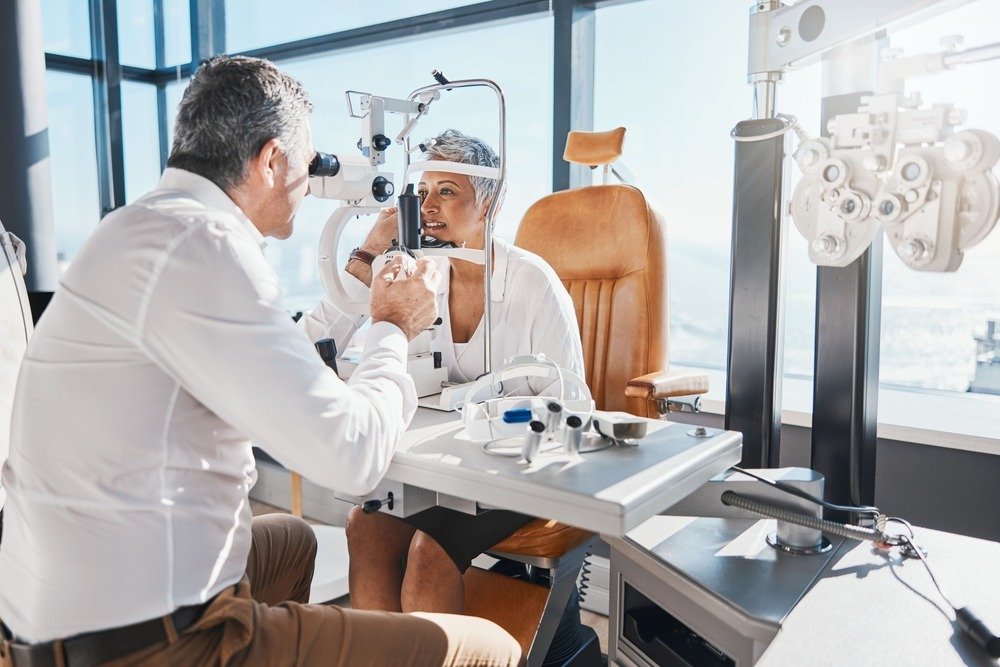
An optometrist is an eye care professional who provides primary vision care. Optometrists perform comprehensive eye examinations, and they prescribe corrective lenses to improve visual acuity. They also have a fundamental role in monitoring eye health, identifying early signs of systemic diseases, and providing rehabilitative services. Here’s how optometrists help patients maintain optimal ocular function by treating eye conditions:
Keratonconus
Keratoconus is a progressive condition where the clear tissue at the front of the eye thins and bulges outward, usually into a cone shape. This structural change deflects light as it enters the eye, which causes distorted or blurred vision. Individuals with this condition may experience increased sensitivity to light and glare. Optometrists help manage this condition by regularly measuring and monitoring the corneal surface during routine visits. In the early stages of keratoconus, prescription eyeglasses or soft contact lenses can correct the visual disturbances.
As this condition advances, the cornea gradually changes shape, so patients often require specialized contact lenses to achieve clear sight. Optometrists fit individuals with rigid gas permeable lenses or scleral lenses, which sit over the cornea to create a smooth refractive surface. An optometrist will refer the patient to an ophthalmologist for advanced surgical interventions if the condition becomes severe.
Cataracts
A cataract involves the clouding of a normally clear, inner lens of the eye. This clouding prevents light from reaching the retina clearly, resulting in vision that appears frosted or fogged. Patients with cataracts frequently notice difficulties with activities like:
- Night Driving
- Reading
- Recognizing Faces
While optometrists do not perform cataract surgery, they are central to the detection and ongoing management of this condition.
Cataracts generally develop slowly over time, but regular eye assessments allow professionals to track their progression. During these exams, an optometrist evaluates the density of the cataract and its impact on your daily visual function. They update eyeglass prescriptions to maximize vision during the early stages. When cataracts begin to significantly interfere with daily activities, the optometrist coordinates with a surgeon to plan lens replacement surgery. Following the procedure, they also provide comprehensive post-operative care to monitor healing.
Astigmatism
In astigmatism, instead of being perfectly round like a basketball, the eye takes on an elongated shape, like a football. Astigmatism is a common refractive error caused by an irregular curve in the cornea or the lens of the eye. This asymmetrical curvature prevents light from focusing evenly on the retina, causing vision to appear blurry or stretched at all distances.
Optometrists diagnose astigmatism during a standard eye examination using specialized instruments that measure how the eye focuses light. They determine the exact degree of the irregular curvature and map the corneal surface, documenting this key information. To manage astigmatism, optometrists prescribe corrective options tailored to each patient’s specific condition.
Management options for astigmatism primarily include prescription eyeglasses or toric contact lenses. Toric lenses are designed to remain stable on the eye, enabling them to stay on the unique shape of the cornea. By providing these precise corrections, optometrists help individuals achieve clear vision for daily tasks.
Contact an Optometrist To Learn More
If you notice changes in your vision or need to schedule a routine eye exam, contact a local optometrist. By regularly visiting an eye doctor, you can learn more about your specific visual needs and the care options available. Regular comprehensive examinations allow professionals to identify structural changes early and implement appropriate management strategies. Scheduling a consultation is the first step toward better eye health, and a qualified doctor can provide the guidance you need.