An echocardiogram is a medical test that uses high-frequency sound waves to create moving, real-time images of the heart. These ultrasound images allow healthcare professionals to observe the size, structure, and movement of the heart muscle and its valves. Echocardiograms are non-invasive procedures that do not require incisions, and they provide structural information without radiation. By observing the heart in action, medical providers can gather the necessary anatomical data to diagnose conditions and formulate appropriate care plans. Here’s more information on these diagnostic tests and how they work:
Stress Echocardiogram
Echocardiograms capture real-time images of the heart in motion, enabling physicians to identify structural abnormalities and assess the heart’s pumping ability. Physicians often recommend an echocardiogram to investigate common symptoms such as unexplained shortness of breath, chest pain, or irregular heartbeats. There are different types of these tests, but they generally collect data to measure blood flow and evaluate muscle function. This data helps medical teams determine whether areas of the heart muscle are receiving insufficient blood supply.
A stress echocardiogram combines a traditional ultrasound of the heart with a controlled physical stress test. This procedure monitors heart function while the patient exercises, typically on a treadmill or a stationary bicycle. If a patient is unable to perform physical exercise, medication can be administered to simulate the cardiovascular effects of exertion.
A stress test captures ultrasound images both before physical activity begins and immediately after it concludes, evaluating the heart under stress. Comparing these two sets of images helps medical professionals observe how the heart muscle responds to increased demand for oxygen and blood flow. Patients wear specialized monitors to track their heart rate and blood pressure throughout the entire session, and providers stand by to enable safe testing.
Transthoracic Echocardiogram
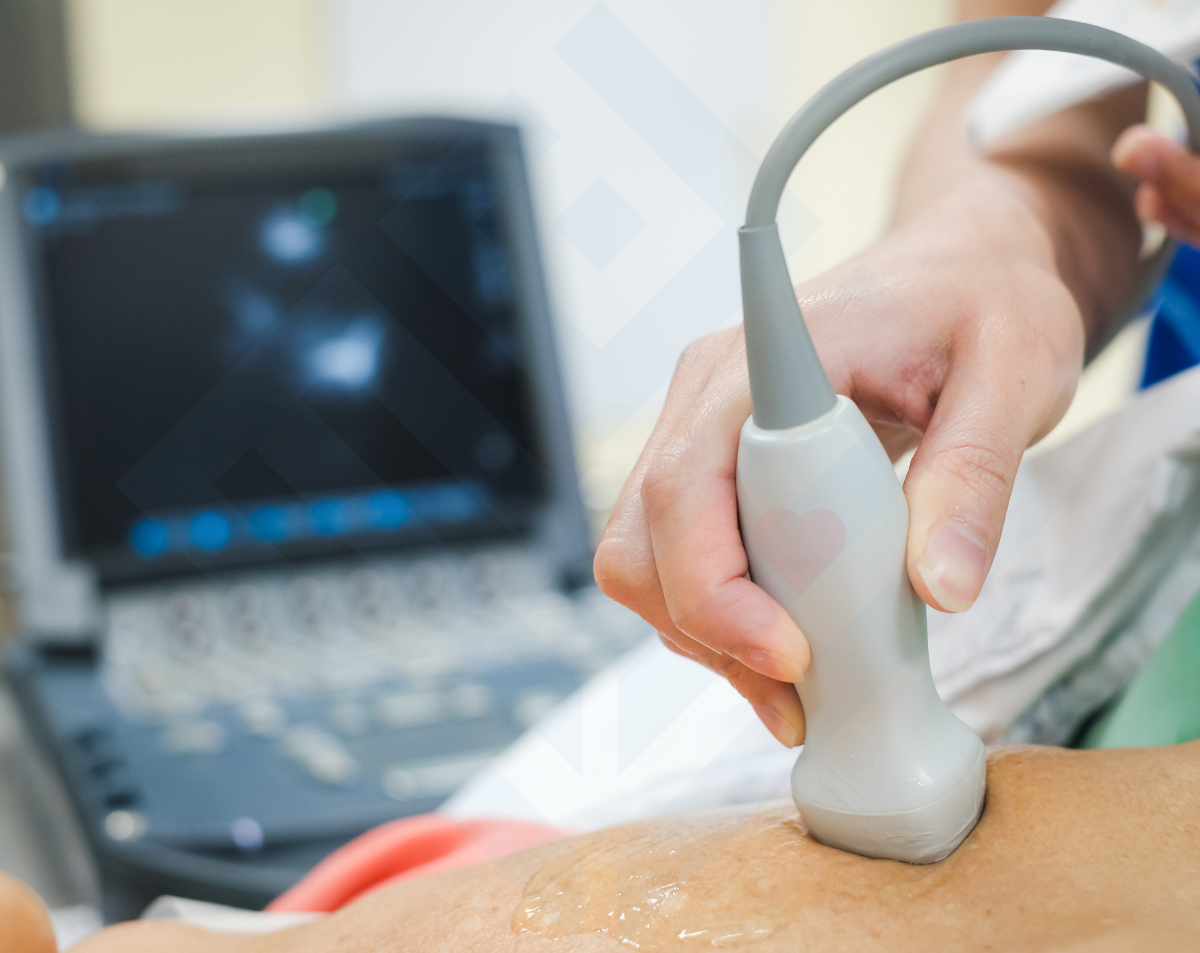
The transthoracic echocardiogram (TTE) is the most common type of heart ultrasound. During this standard outpatient procedure, a technician applies a water-based gel to the patient’s chest to improve sound wave transmission. They then place a specialized handheld device, called a transducer, directly on the skin.
This transducer sends sound waves through the chest wall to the heart, and it records the echoes as they bounce back. A connected computer system instantly translates these echoes into detailed video images on a medical monitor. The technician moves the device across different areas of the chest to capture multiple angles, offering a clear, comprehensive view of the heart’s overall anatomy.
Transesophageal Echocardiogram
Because the ribs and lungs can obstruct the view of the heart, a standard external ultrasound may not be able to produce sufficiently clear images. In these instances, a transesophageal echocardiogram (TEE) may be recommended. This procedure involves carefully guiding a flexible tube equipped with a miniature transducer down the patient’s esophagus. The esophagus sits immediately behind the heart, so this internal method completely bypasses the chest wall. The transducer captures highly detailed images of the heart’s structures, and doctors use this clarity to closely examine the valves. Patients typically receive a mild sedative and a localized throat-numbing medication for comfort during this brief procedure.
Contact a Vascular Specialist Today
Your cardiovascular system supports your overall health by continuously pumping blood throughout your body, and an echocardiogram can assess its internal structures. These specialized imaging tools provide highly accurate data for evaluating your cardiac structure and operational function. Taking a proactive approach to your cardiovascular health allows for timely, thorough assessments. If you need to schedule a clinical evaluation, contact a vascular specialist today. A specialist can discuss your specific testing options and give you expert guidance tailored to your condition.