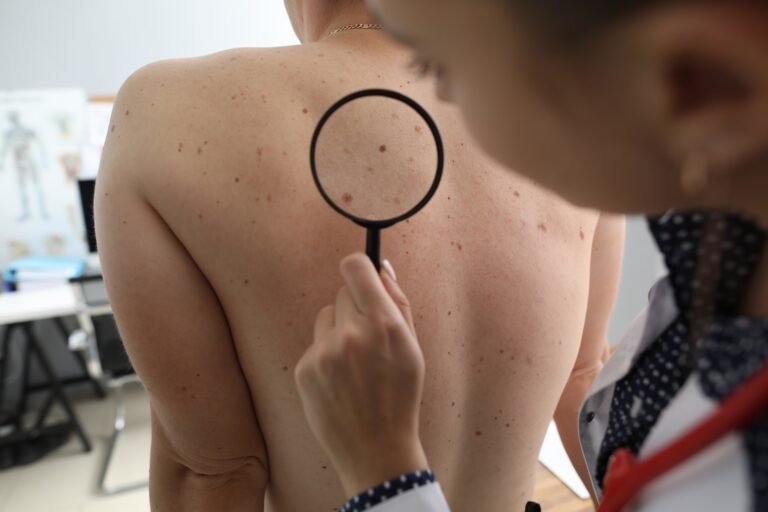
Skin health demands ongoing observation, particularly regarding the various growths that develop over a lifetime. Routine evaluations by a medical professional serve a primary role in monitoring these physical changes. Monitoring these developments provides a structured approach to recognizing potential dermatological issues before they advance into serious conditions. Regular visits to a trained practitioner provide a thorough baseline for your skin’s condition. This process establishes a clear medical record, which allows doctors to track alterations to moles over months and years.
What Are Moles?
Moles represent very common skin growths that manifest when pigmented cells, known as melanocytes, grow in concentrated clusters instead of spreading evenly across the skin. These clusters create visible spots that vary in pigmentation. Individuals frequently develop these marks during early childhood and adolescence. A standard adult typically possesses dozens of these growths, distributed across the face, torso, and limbs.
A standard mole generally features a uniform color palette and presents as a solid shade of brown, black, tan, or even the underlying flesh tone. Their shapes remain largely symmetrical, commonly appearing as distinct circles or ovals with sharply defined edges. These standard growths might change very slowly as a person ages. They pose minimal risk to overall health and require no intervention beyond standard observation.
What Is a Problematic Mole?
An atypical mole deviates noticeably from the standard visual profile of common moles. They typically exhibit asymmetry, meaning one half of the spot does not visually match the other half. The borders often appear ragged, blurred, or irregular, blending gradually into the surrounding skin rather than displaying a sharp outline. Instead of a uniform shade, these spots might display multiple colors simultaneously. Atypical spots frequently exceed the diameter of a standard pencil eraser, though they can occasionally present as smaller marks. While possessing an atypical growth does not definitively indicate the presence of disease, it functions as a prominent risk marker. They necessitate closer medical supervision.
How Are They Identified?
A professional skin evaluation consists of a comprehensive, systematic visual inspection of the entire body, where a clinician methodically examines the skin’s surface from head to toe. This thorough assessment includes areas frequently overlooked during personal observation, such as the scalp. The spaces between toes and fingers, the buttocks, and behind the ears are other areas that may be checked.
During the appointment, the practitioner carefully analyzes existing marks for specific warning signs. They actively look for growths that bleed, ooze fluid, develop a crust, or induce localized pain when subjected to light pressure. The clinician evaluates each spot against established diagnostic criteria and notes any rapid changes in size, shape, or elevation.
Medical providers often utilize specialized equipment during this process. A dermatoscope, which functions as a high-powered, lighted magnifying instrument, allows the practitioner a closer view of a mole. This precise visualization aids in distinguishing between benign clusters of pigment and structures that require a tissue biopsy for microscopic laboratory analysis. The entire evaluation typically concludes within a few minutes and offers a highly efficient method for assessing patient health.
Consult a Skin Cancer Specialist
Combining professional medical evaluations with consistent at-home self-examinations creates a robust strategy for maintaining dermatological wellness. Individuals should inspect their own skin regularly in a well-lit room using a full-length mirror and note any new growths or modifications to existing marks. If you notice a new spot, a mark that looks distinctively different from all others on your body, schedule an appointment with a qualified dermatologist. Establishing a relationship with a dedicated skin cancer specialist provides clarity and access to expert clinical guidance tailored to your specific dermatological profile.