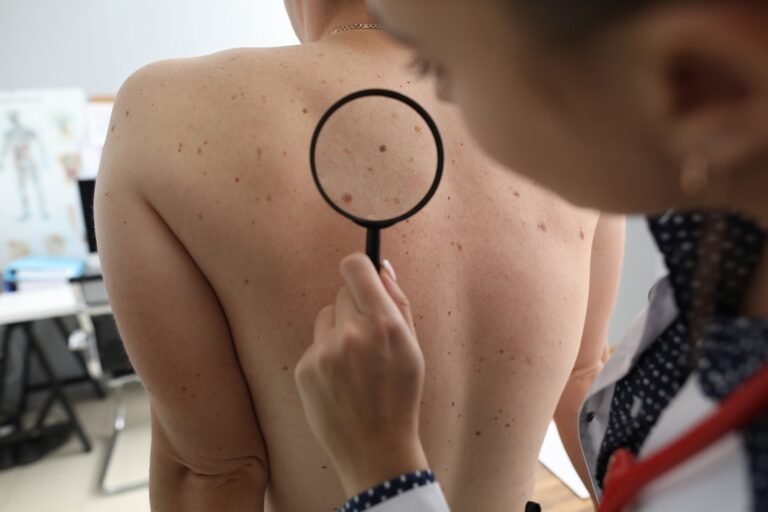
Skin cancer is characterized by the abnormal and uncontrolled growth of skin cells. It most often develops on areas of the skin that are heavily exposed to the sun, such as the face, neck, arms, and hands. It’s significant to remember that this condition can also appear on parts of your body that rarely see sunlight, like the palms of your hands or soles of your feet. The early signs of skin cancer typically manifest as unusual changes on the surface of your skin; these initial indicators might present as a new, unfamiliar growth, a sore that doesn’t heal, or a noticeable and persistent change in the size, shape, or color of an existing mole. Spotting these physical changes as soon as they appear is key because it allows individuals to take prompt action. Early detection often leads to more straightforward and effective management options, improving the overall outlook.
Skin Cancer Overview
Skin cancer develops when mutations occur in the DNA of skin cells. These genetic errors disrupt the normal cell cycle, and they lead to uncontrolled growth and rapid multiplication. This process results in the formation of a mass of abnormal cells, known as a tumor. The three major types of skin cancer are basal cell carcinoma, squamous cell carcinoma, and melanoma. Basal cell and squamous cell carcinomas typically develop on sun-exposed areas like the face, ears, neck, and hands. Melanoma can develop anywhere on the body, whether in an existing mole or as a new dark spot.
Minimizing exposure to ultraviolet (UV) radiation from the sun is a significant step toward reducing your overall risk, but it is not a guarantee of protection. Routine visual inspections of your entire body remain recommended. Understanding the fundamental ways these conditions behave allows you to approach your skin health with a clearer, more informed perspective, enabling you to spot potential concerns early.
Key Warning Signs
Being familiar with your skin’s normal appearance is the first step in identifying potential issues. Changes that seem minor at first may signal a need for attention, and knowing what is typical for your skin helps you spot differences more easily. Professionals often recommend using the ABCDE method to evaluate moles and pigmented spots. This method offers a structured way to observe changes:
- Asymmetry: One half of a mole or spot does not match the other half in shape.
- Border: The edges of the spot appear irregular, scalloped, or poorly defined.
- Color: The pigmentation is not uniform. You might see varying shades of tan, brown, black, or even patches of pink, red, white, or blue.
- Diameter: The lesion is larger than six millimeters across, which is roughly the size of a pencil eraser.
- Evolving: The spot changes in size, shape, color, or elevation over weeks or months.
Monitor your skin regularly, and take note of any new lesions that appear. Pay attention to sores that ooze, bleed, or crust over without healing completely.
Professional Intervention for Skin Cancer
Conducting routine self-examinations helps you track changes in your skin over time. If you observe a spot that stands out from the rest of your moles, it is time to seek professional guidance. A medical professional will carefully examine the suspicious area, and they can determine if further testing is appropriate. Do not wait for a spot to become painful, as early skin changes are often painless. Keep in mind that many skin abnormalities are benign, but a clinical evaluation removes the guesswork.
Ask a Dermatologist Today
Taking charge of your skin care involves relying on expert guidance when you notice something unusual. Dermatologists have the specialized training to assess skin irregularities, and they use specialized tools to examine your skin closely. If you are unsure about a particular mole or blemish, scheduling a consultation is a responsible next step. Regular check-ups build a baseline for your skin health and equip you with the knowledge to protect yourself. Ask a dermatologist today to schedule a thorough skin examination and discuss a routine that fits your needs.