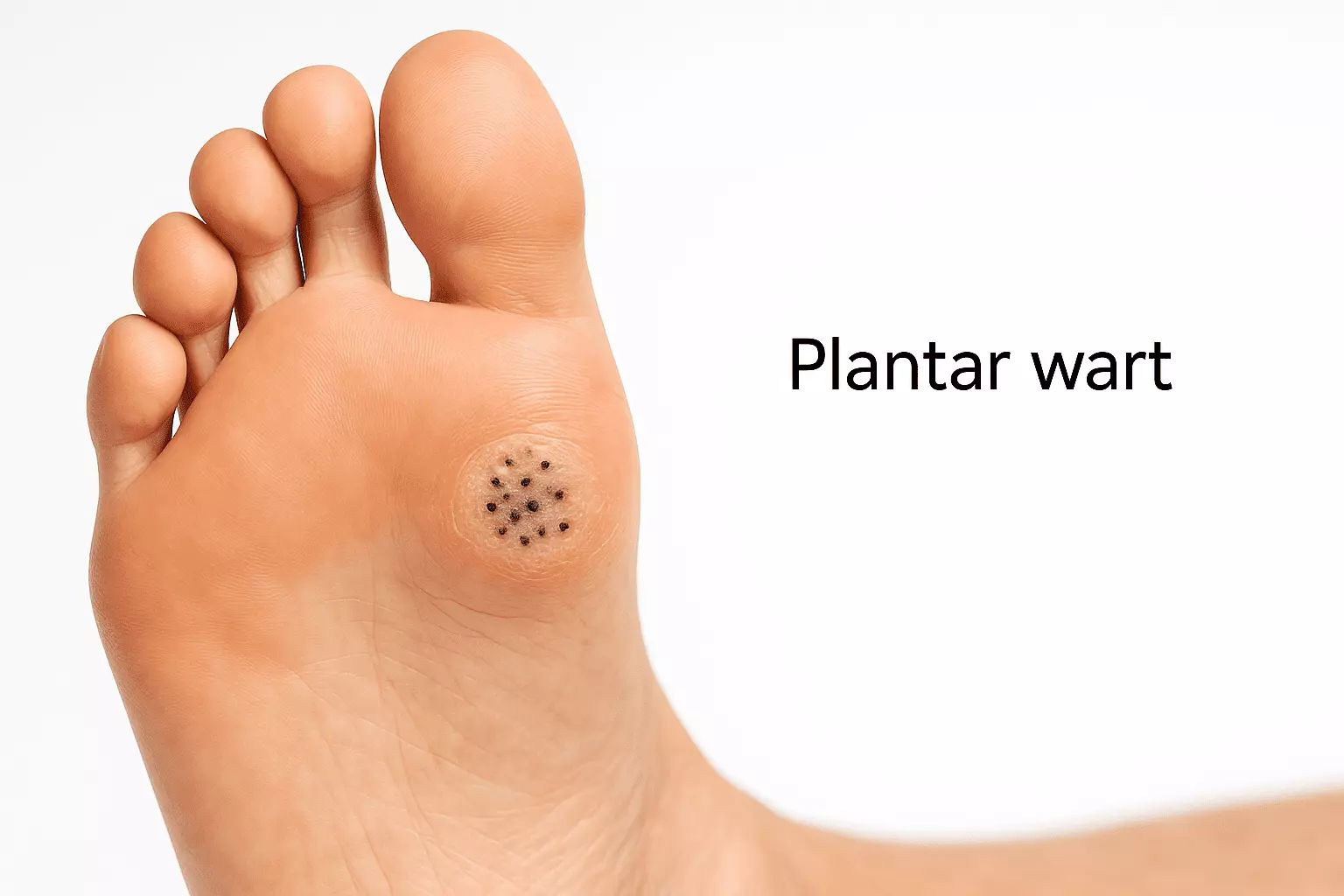
Plantar warts appear as noncancerous skin growths on the soles of the feet. The human papillomavirus causes these growths, and the infection enters the skin through microscopic cuts. Because the infection targets weight-bearing areas, individuals experience pain during physical activity, and this discomfort limits movement. The virus survives in warm environments. People frequently contract the infection in public locker rooms, or they pick up the virus near swimming pools. While the condition may resolve on its own, some infections persist over time, and medical professionals intervene when symptoms continue. When patients inspect lesions, they may observe small black dots, and these represent clotted blood vessels beneath the surface.
Patterns of Plantar Warts
Plantar warts survive on damp surfaces. Wet floors may harbor the virus, and shared towels can spread infection between individuals. Since the virus requires a portal of entry, minor abrasions allow access, and infection develops after exposure. Immune system differences affect susceptibility, and children contract the virus more frequently than adults. Because adults may develop partial immunity over time, their bodies resist infection more effectively, but new strains can still produce outbreaks. Preventative steps reduce transmission rates. Individuals wear protective footwear in showers, or they clean their feet thoroughly after exposure. If shared spaces remain damp, individuals clean surfaces regularly, and they avoid sharing personal items.
Identifying Symptoms
Patients identify plantar warts through visual and physical signs. The lesions may resemble calluses, and they disrupt normal skin lines on the foot. When individuals apply lateral pressure, the lesion may produce sharp pain, and this response helps distinguish warts from other thickened skin conditions. Walking increases friction against the growths. Pressure may push the wart deeper into the tissue, and this can trigger localized pain. Because weight distribution shifts to avoid discomfort, patients may alter gait patterns, and these changes can contribute to joint strain. Some warts appear in clusters on the foot. Medical professionals describe these as mosaic patterns, and they may cover larger surface areas. As clusters expand across high-pressure areas like the heel, discomfort increases, and clinical evaluation may be required.
Managing Treatment
Clinicians diagnose plantar warts through physical examination. Providers may remove surface tissue, and they look for small clotted vessels that support diagnosis. After confirmation, treatment options are reviewed, and patients select an approach based on severity. Over-the-counter salicylic acid may soften wart tissue. Patients apply the treatment regularly, and the affected layers gradually break down over time. Because some warts resist topical treatment, clinicians may use cryotherapy, and liquid nitrogen destroys infected tissue. Laser procedures target the blood supply to the lesion, and the treated tissue breaks down over time. If standard treatments do not resolve the condition, additional therapies may be used, and the body responds by targeting infected tissue.
Find a Clinic
Plantar warts affect foot function and daily movement. The human papillomavirus produces skin lesions, and the resulting discomfort can alter walking patterns. Since gait changes may increase strain on surrounding joints, secondary discomfort can develop over time. Clinical evaluation identifies the condition, and hygiene practices reduce transmission risk. Protective footwear limits exposure in shared environments, and early treatment supports symptom control. When individuals understand infection patterns and treatment options, they maintain better foot function and reduce disruption to mobility over time. Find a clinic to learn more.