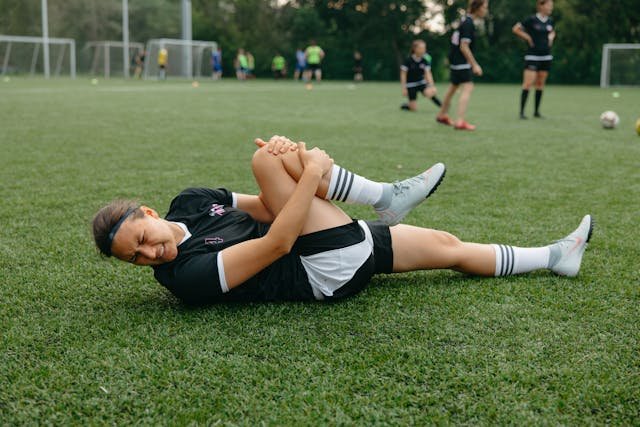
Sports injuries happen to athletes at every level, from weekend runners to competitive players. Some injuries appear suddenly, and others build slowly over weeks of training. When you know what to watch for, you notice small changes before they turn into bigger problems. Here are some early signs that your body may show, indicating a sports injury is occurring:
Persistent Pain
Pain signals that something needs attention. Sharp discomfort during activity fades quickly, but persistent pain lingers long after you stop moving. When soreness stays for days, it typically points to a deeper issue that rest alone will not fix.
Track how the pain behaves over time. Mild aches follow hard workouts, and they typically ease within a day or two. If the pain returns whenever you move a certain way, that pattern requires a closer look from a professional. This is how sports injuries develop.
Swollen Joints
Swelling around a joint means fluid has gathered in response to stress or damage. You might notice puffiness, and the area may feel warm to the touch. When a knee, ankle, or wrist looks larger than its match on the other side, take note.
Watch for these standard signs of joint swelling:
- Visible puffiness around the joint
- Skin that feels tight or warm
- Stiffness when you try to bend or straighten
Swelling limits movement. It reduces your comfort during simple tasks, and it signals inflammation underneath. If the swelling stays for more than a few days, seek care to find the cause.
Decreased Range of Motion
Range of motion describes how far a joint moves in its normal path. When you struggle to reach, bend, or rotate the way you once did, your body may be protecting an injured area. Stiffness that blocks full movement points to trouble in the muscle, tendon, or joint.
Test your movement gently at home. Compare one side to the other, and note any spot where the motion stops short. If one shoulder rotates less than the other, that gap tells you something has changed.
Reduced motion affects your daily routine. It makes reaching overhead harder, and it slows your performance during play. A professional evaluation helps you understand what is limiting the joint.
Numb Areas
Numbness feels like tingling, pins and needles, or a total loss of sensation. It happens when a nerve gets compressed or irritated during repeated activity. When a hand, foot, or limb goes numb during exercise, your nerves may be under pressure.
Pay attention to how often numbness returns. Occasional tingling fades fast, but repeated numbness in the same spot points to an ongoing problem. If the sensation spreads or lingers after you rest, contact a medical provider.
Address Sports Injuries Early
Early signs give you a chance to act before an injury worsens. Persistent pain, swollen joints, limited motion, and numbness each tell you that something needs care. When you spot these signals early, you make choices that support your recovery. If you notice any of these symptoms, schedule a visit with our urgent care team today to get a clear assessment.