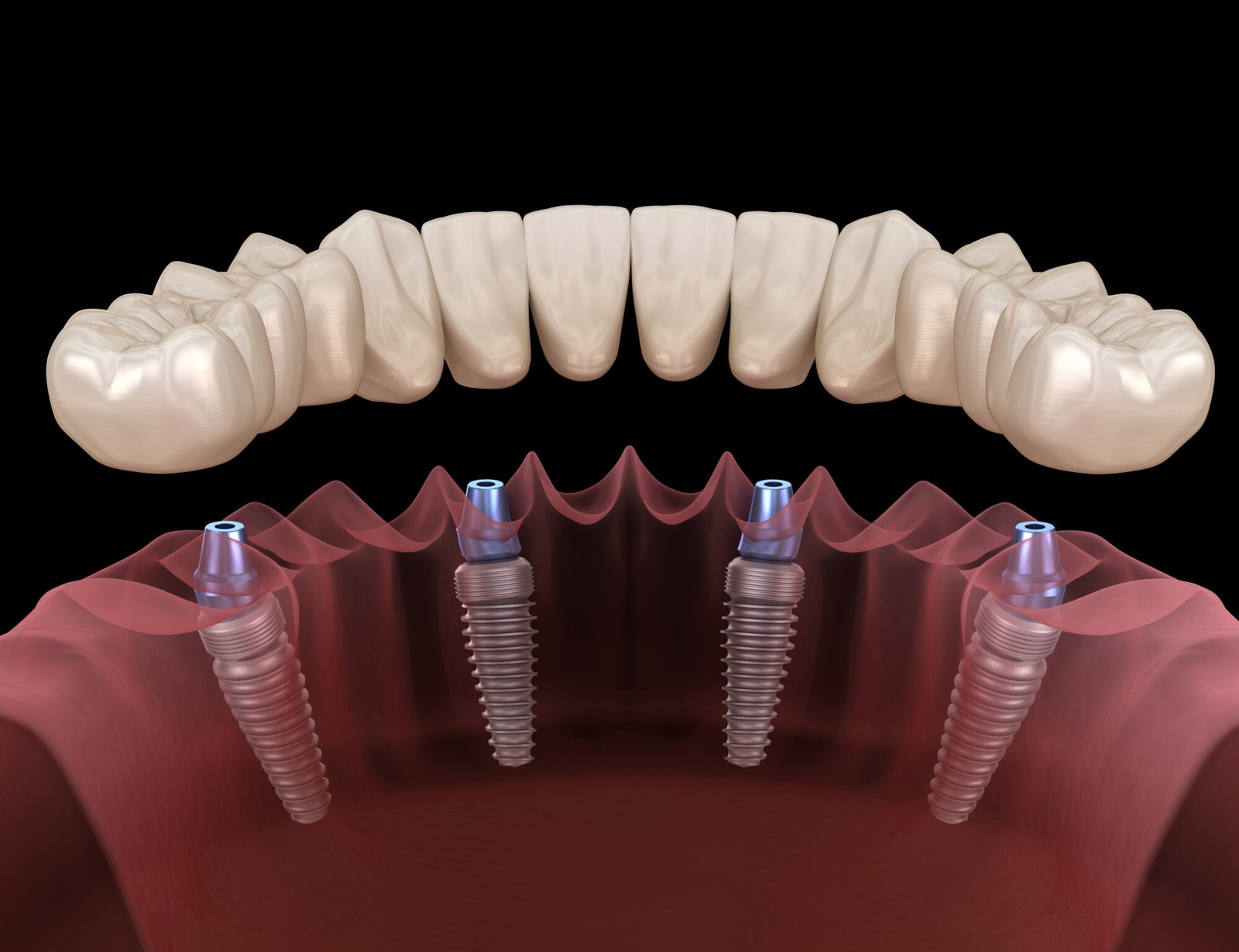
All-On-4 uses four dental implants to support a full-arch prosthetic rather than placing an implant for each missing tooth. It is often used when a patient has significant tooth loss or teeth that need to be removed across one arch. The All-On-6 is similar, but it adds additional stability over time. Here is some information for comparing All-On-4 and All-On-6 restorations:
Understanding Bone Density Requirements
Bone density affects treatment decisions, and it determines whether All-On-4 or All-On-6 is more appropriate. A thicker, taller jawbone gives a surgeon more placement options, especially in the back of the mouth. When bone volume is lower, All-On-4 is chosen because the angled rear implants help avoid the sinus cavity and the nerve canal.
Patients with strong bone support may receive six implants to spread the load across more anchor points. Others need bone grafting before treatment because their bone shape, width, or past tooth loss does not provide enough support. A detailed scan is used to measure these factors, and treatment planning shapes the final restoration design.
Jaw location also matters. The upper jaw is often softer than the lower jaw, and this may affect the number and position of implants. Bone loss from long-term denture wear, gum disease, or missing teeth for many years narrows the choices. In those cases, the treatment plan is based on anatomy because bone structure limits implant options.
Reviewing Strength and Stability
With six implants instead of four, All-On-6 offers more support points under the prosthetic arch. This helps reduce stress on each implant during biting and chewing. It also gives the dentist greater design flexibility, and they can create a longer arch with molar support. All-On-4 supports a full arch with fewer implants and a shorter surgical plan. The angled rear implants help create a broad base of support. Long-term stability is also impacted by:
- Prosthetic design
- Bite force
- Clenching habits
- Jaw shape
Material choice also plays a role. A zirconia arch differs from an acrylic prosthesis on a titanium bar in how it feels, wears over time, and transfers chewing forces. Design details, such as implant sizing and how closely the prosthetic fits against the gums, also affect overall comfort and long-term stability. Strength is not only based on the number of implants, but it also comes from the full system working together.
Preparing for the Procedure and Recovery
Before surgery, patients usually complete a dental exam and a review of their medical history. Photos, digital scans, and bite records are taken, and these help the dentist design a treatment plan. If extractions are planned, they determine when teeth will be removed before implants are placed, so each step is properly coordinated.
Recovery varies by person and by the amount of treatment completed during a single visit. Mild swelling, soreness, and changes in speech are common, and a soft-food diet decreases pressure as the implants bond with the bone. All-On-6 involves more implant sites, which changes the surgical details. All-On-4 may reduce treatment complexity, especially when anatomy limits placement choices. Patients need to clean around their restorations each day using the tools recommended by their dental team. Long-term maintenance often includes exams, professional cleanings, and periodic checks of the prosthetic screws and materials.
Learn More About All-On-4 Implants
All-On-4 and All-On-6 restorations both replace a full arch, but they differ in implant number, bone requirements, and load distribution. The right option depends on the patient’s anatomy and prosthetic plan. A full exam and 3D imaging provide dentists enough detail to compare these approaches. To learn more about All-On-4 implants, schedule a consultation with a dentist today.