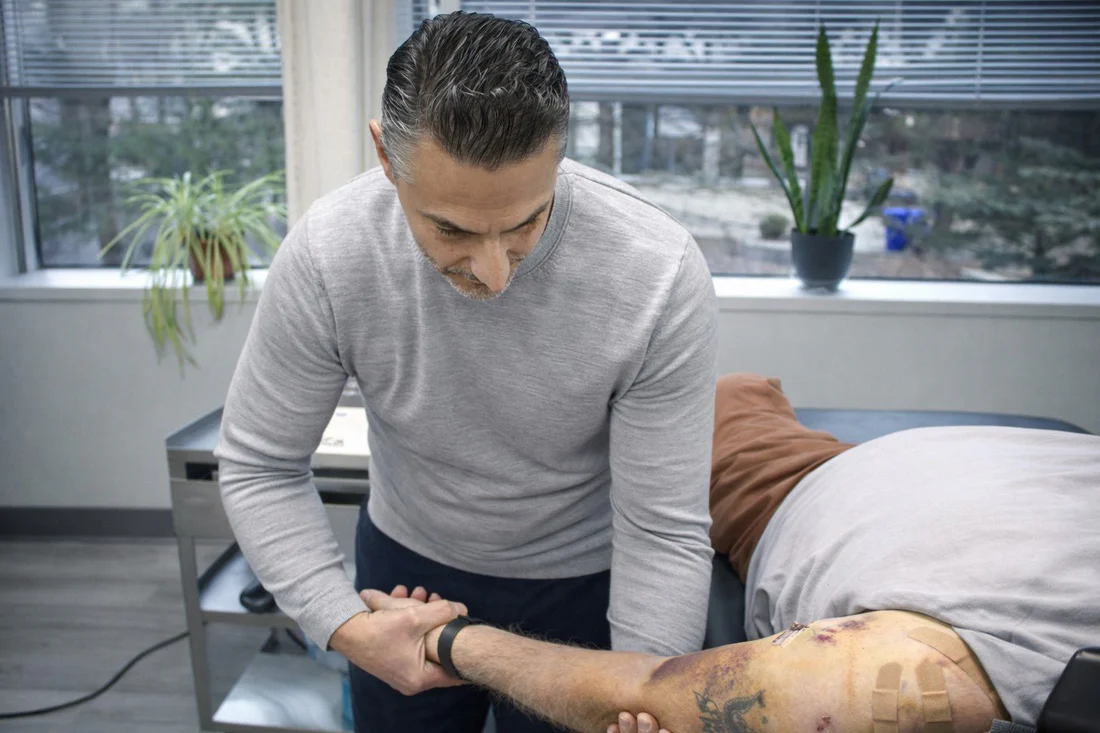
The human shoulder relies on a complex network of muscles and tendons to maintain its wide range of motion. Over time, physical stress or sudden impacts can cause damage to these delicate tissues. When tears occur, patients often experience pain and a noticeable decline in their ability to move the arm. Arthroscopic rotator cuff repair serves as a primary method for treating these injuries. This minimally invasive technique aims to reconnect torn tissues to the bone and facilitate the body’s natural healing process.
What Is the Rotator Cuff?
The shoulder joint operates as a ball-and-socket mechanism. The rotator cuff consists of a specific group of four muscles, as well as their associated tendons. These components work together to attach the upper arm bone to the shoulder blade. This anatomical structure performs two primary functions. It keeps the head of the upper arm bone firmly seated within the shallow socket of the shoulder blade and provides the mechanical leverage required to lift and rotate the arm.
Without this network of muscles and tendons, the shoulder would lack the stability needed for basic movements. The tissues act as a dynamic stabilizer and continuously adjust to varying loads and angles of motion. The surrounding soft tissues remain highly susceptible to wear and physical strain over a person’s lifetime.
What Injuries Affect It?
Damage to the shoulder typically falls into two distinct categories: acute trauma and degenerative wear. Acute injuries happen suddenly. A person might fall onto an outstretched arm, lift a heavy object abruptly, or dislocate the shoulder joint entirely. These incidents can cause the tendons to tear partially or completely rip away from the bone.
Degenerative damage develops gradually over many years. Repetitive arm motions, often associated with specific occupations or sports, place continuous stress on the shoulder tissues. As individuals age, the blood supply to the rotator cuff tendons decreases; this reduction in blood flow limits the body’s ability to repair minor tissue damage naturally.
Bone spurs can also form on the underside of the shoulder blade, rubbing against the tendons when the arm is lifted. This friction gradually frays the tissue, which may lead to tears. Older adults can experience these types of degenerative injuries.
What Is Arthroscopic Rotator Cuff Repair?
When physical therapy and non-surgical treatments fail to relieve pain, orthopedic surgeons may recommend surgical intervention. Arthroscopic rotator cuff repair is a surgical technique that is designed to reattach torn tendons to the upper arm bone. The surgeon creates a few small incisions around the shoulder joint. Through these incisions, the surgeon uses specialized miniature instruments to remove or repair damaged tissue and bone spurs.
Seek Professional Orthopedic Care
Ignoring shoulder pain can lead to increased joint stiffness and cause progressive muscle weakness. If you experience persistent pain when reaching overhead, scheduling an evaluation with an orthopedic specialist is the recommended next step. A qualified surgeon can order imaging tests, accurately diagnose the extent of the tissue damage, and outline an appropriate treatment plan. Thorough medical guidance allows patients to make informed decisions about their joint health and long-term physical mobility.