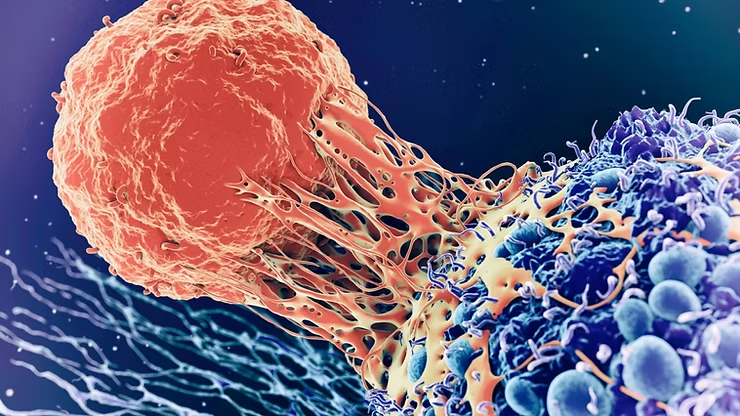
Cancer treatment has changed as research has refined how doctors find and treat disease. Surgery, chemotherapy, and radiation remain standard tools, and newer methods now guide treatment with more detail. Since tumors differ by location, size, and biology, targeted therapies help match treatment to specific clinical findings. Here is more information on targeted therapy approaches for cancer:
Intensity-modulated Radiation Therapy
Intensity-modulated radiation therapy uses computer-guided planning to shape radiation beams around a tumor, and it adjusts beam strength across treatment areas. Doctors map the target and nearby organs before cancer treatment. Since the system varies dose levels within each beam, it supports treatment near the prostate, head and neck, brain, and other complex sites. This method aims radiation at defined tissue while limiting exposure to nearby structures.
Stereotactic Body Radiation Therapy
Stereotactic body radiation therapy delivers very focused radiation in a small number of sessions, and doctors use it for tumors with clear boundaries. It treats small targets. Since treatment planning relies on detailed imaging and exact positioning, teams use it for lung, liver, spine, and adrenal lesions. Its high precision supports treatment where standard fields may cover more normal tissue.
Doctors complete a careful setup before each session, but the treatment itself often takes less time than longer radiation courses. Since small shifts affect accuracy, immobilization devices and imaging checks guide alignment throughout the visit. Teams select this method when tumor size, location, and motion fit the treatment plan.
Image-guided Radiation Therapy
Image-guided radiation therapy combines imaging with radiation delivery, and the care team checks tumor position before or during treatment. Daily anatomy changes. Since organs move with breathing, digestion, and bladder filling, imaging helps adjust the setup to the current body position. This process supports more accurate targeting across a treatment course.
Doctors may use several imaging tools during image-guided radiation therapy:
- Cone beam CT
- X-ray imaging
- Surface tracking
These tools show position data, and the team uses that information to refine alignment. Small adjustments matter. When a tumor sits near the bowel, spinal cord, or other sensitive tissue, updated images help guide each session with greater precision.
Image-guided radiation therapy works with other radiation methods, and it strengthens treatment planning through repeated verification. Teams review images across visits. Since anatomy may shift during several weeks of care, this approach helps maintain alignment from the first session to the last. Patients often receive this technique with prostate, lung, abdominal, and pelvic treatments.
Volumetric Arc Therapy
Volumetric arc therapy delivers radiation as the machine rotates around the patient, and the system changes beam shape and dose rate during movement. Since the machine treats from many angles in one or more arcs, clinicians use this method for tumors that need detailed dose shaping in a shorter session. This may involve:
- Shorter treatment times compared to traditional methods improve patient comfort.
- Precise dose delivery, minimizing damage to surrounding healthy tissues.
- Effective for complex tumor shapes that require a detailed dose distribution.
- Reduced side effects due to the accuracy of radiation targeting.
Schedule Cancer Treatment Near You
Targeted therapies have expanded cancer treatment options, and they give doctors more ways to match care to the tumor site. Radiation methods now use planning software, imaging, and controlled beam delivery. Since each technique serves a different clinical purpose, a consultation helps determine which approach fits the diagnosis and treatment goals. Schedule cancer treatment near you to review your options with a qualified oncology team.