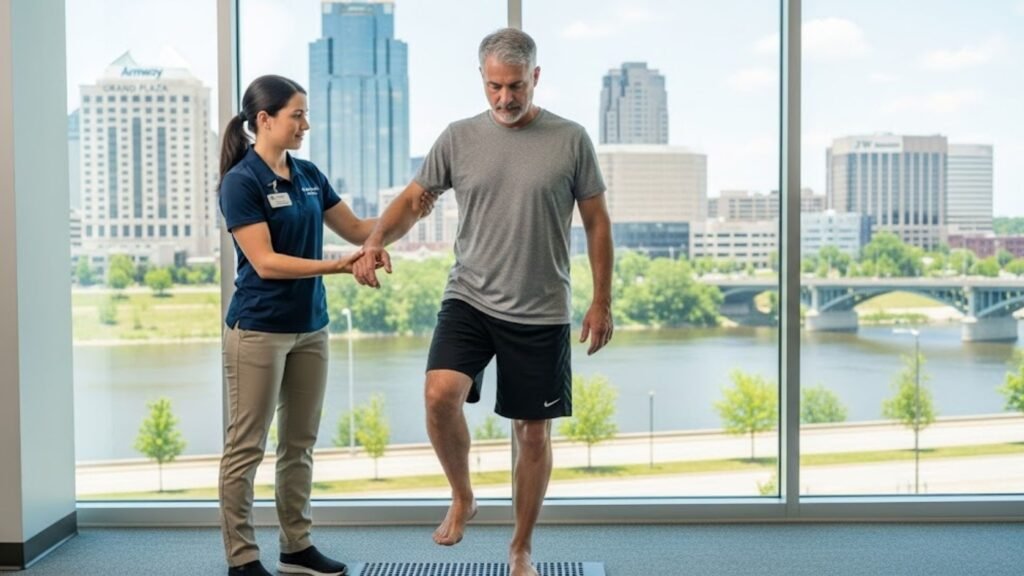
Dizziness can affect balance, movement, focus, and daily comfort. It may be linked to inner ear issues, changes in blood pressure, or other health concerns that require proper evaluation. Exercises and therapies may help improve stability, reduce symptoms, and support safer movement when guided by a healthcare professional. Here is more information on exercises and therapies to reduce dizziness:
Exploring Balance Exercises
Specific movements train the brain to adapt to changes in spatial orientation. Patients can practice these motions regularly, and the central nervous system slowly builds tolerance. The following exercises provide helpful ways to manage dizziness and build stability:
- Head Rotations: A patient turns their head from side to side while they maintain visual focus on a stationary object. This activity trains the eyes to stay fixed, and it reduces visual blurring during movement.
- Weight Shifts: An individual stands with their feet apart and shifts their weight from one leg to the other. This movement strengthens the lower body, which helps the patient maintain an upright posture.
- Gaze Stabilization: A person holds a target in front of their face while they move their head up and down. This exercise strengthens the vestibulo-ocular reflex and keeps vision clear during motion.
Patients should begin these movements slowly, as rapid motions can trigger nausea.
Supporting Vestibular Therapy
Vestibular therapy targets the inner ear system to alleviate chronic dizziness. A physical therapist designs a custom program that addresses each patient’s specific deficits. The treatment can normalize nerve signals, and it improves how the brain processes balance information.
Therapists use habituation exercises to treat patients who experience symptoms during quick movements. The patient repeatedly performs the triggering motion until the brain learns to ignore the false signals. This approach requires commitment, but it produces fundamental improvements over time.
Providers also use repositioning maneuvers for specific inner ear issues. The therapist guides the patient’s head through a series of specific angles, which move displaced calcium crystals back to their proper location. This technique can resolve vertigo and prevent future episodes.
Practicing Daily Safety
Modifications to the daily routine can prevent accidents and minimize symptom triggers. The following adjustments can protect patients in the home:
- Proper Lighting: Bright lights illuminate walkways, making obstacles clearly visible. Patients should install nightlights in hallways and make sure staircases have adequate illumination.
- Clear Pathways: Clutter creates tripping hazards, leading to serious falls. Patients should remove loose rugs from floors and keep electrical cords tucked away against the walls.
- Slow Transitions: Sudden postural changes may disrupt blood flow and cause instant unsteadiness. Individuals should rise slowly from a seated position and pause before starting to walk.
These practical steps can protect patients while they recover from dizziness.
Seeking Medical Evaluation
Occasional lightheadedness rarely signals a severe medical emergency. Sudden or severe dizziness requires immediate medical attention so doctors can rule out neurological problems. A physician will conduct a thorough exam, and they may order diagnostic blood tests. Doctors look for underlying conditions that disrupt normal balance function. They check blood pressure levels, as poor circulation often limits oxygen delivery to the brain. The medical team will review your current prescriptions, and they may adjust dosages to minimize side effects.
Advanced diagnostic tools help doctors identify the exact source of your unsteadiness. The clinic may perform an electronystagmography, which measures eye movements to evaluate inner ear health. You must report all symptoms accurately, and your doctor will develop an effective treatment protocol.
Schedule Your Dizziness Evaluation Today
Experiencing persistent dizziness can significantly impact your daily life and increase the risk of dangerous falls. Understanding the root cause is the first step toward effective treatment; a thorough evaluation provides a precise diagnosis. Contact a qualified neurologist near you to schedule your evaluation today.